Build the palette
Separate dominant colors first, then divide them again by light, texture and nearby objects.
 Fun Journey
Get the game
Fun Journey
Get the game
Color, line and texture become the clues
Follow the movement of painted waves, connect koi scales and sort bold studio colors into a finished picture full of visual rhythm.
Choose an art puzzle ↗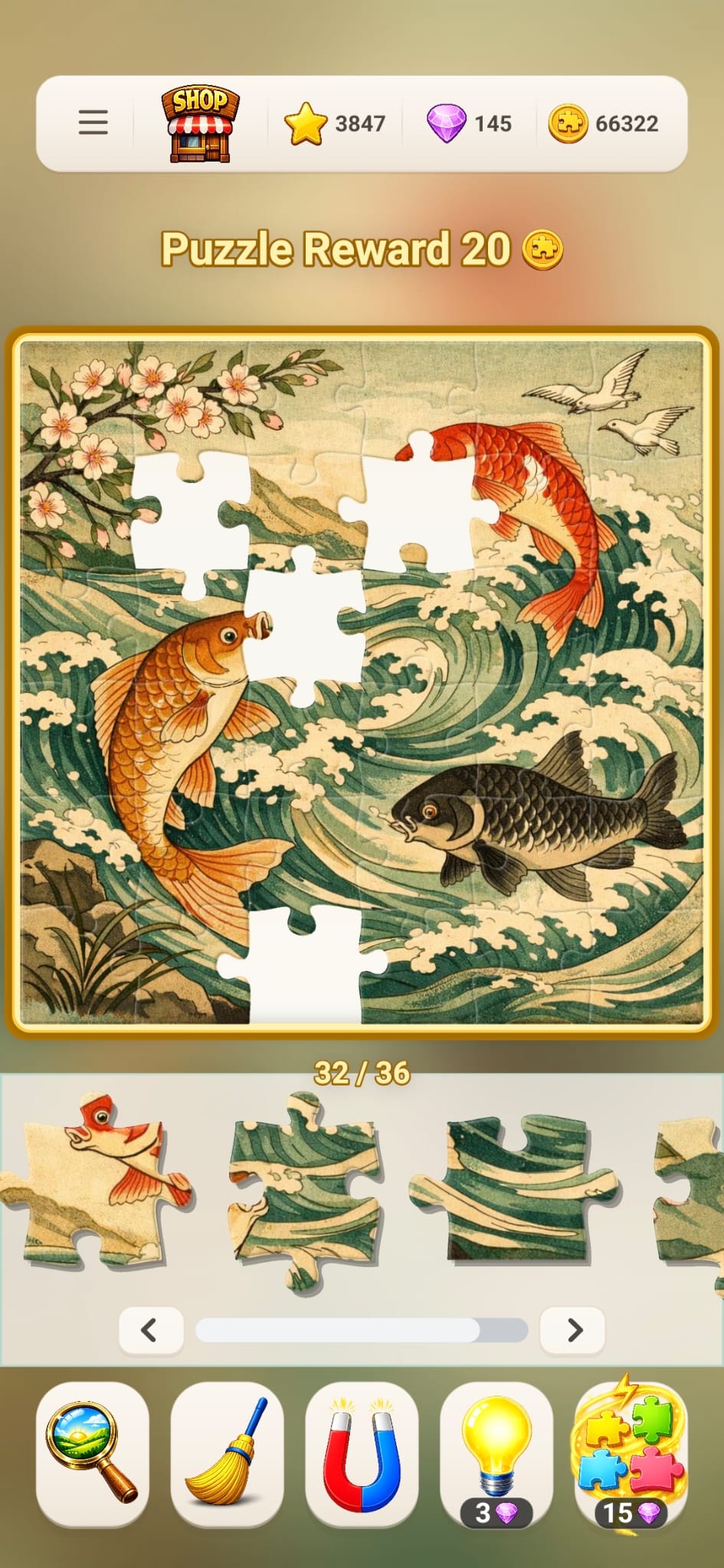
Solve the artist’s decisions
Art puzzles make color and line part of the solving method. A curling wave continues across several pieces, a branch establishes direction and repeated fish scales become a pattern you can follow.
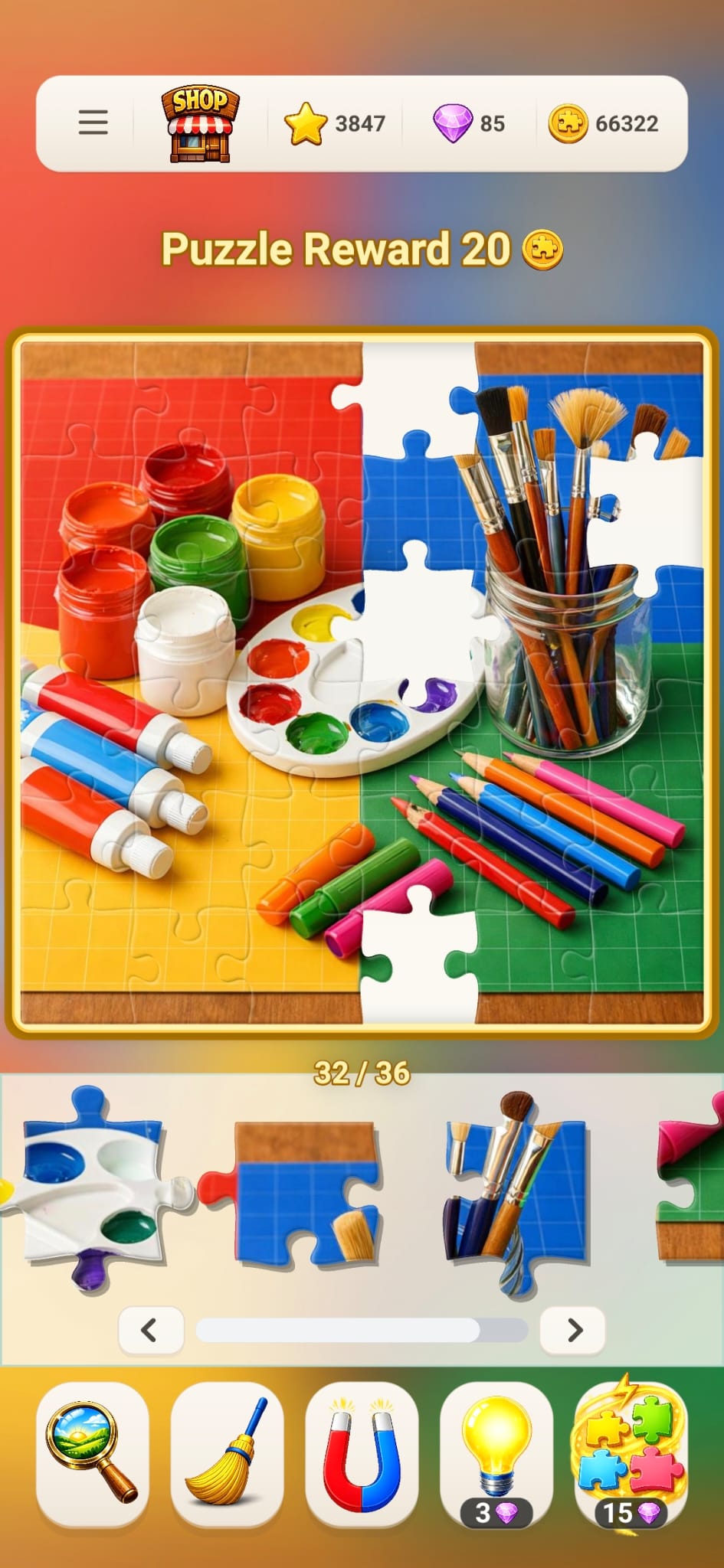
Bold studio scenes offer another rhythm: strong red, blue, yellow and green regions can be sorted quickly before the brushes and palette connect them.
Separate dominant colors first, then divide them again by light, texture and nearby objects.
Curves, brush handles, branches and wave crests reveal which direction each piece should face.
Scales, foam and decorative marks become easier when you compare their spacing instead of only their color.
Two very different palettes
The studio still life offers large blocks of saturated color and recognizable tools. The koi illustration asks for finer comparison across waves, fish and blossoms.
Art puzzle questions
They can be different rather than harder. Illustrations may repeat stylized patterns, while bold paintings can provide clearer color regions than a photograph.
Begin with dominant colors and strong lines. Next separate repeated motifs, highlights and background textures.
Yes. A smaller board lets you enjoy the full composition with less sorting, while larger counts make the painted details more demanding.
A finished picture begins in fragments