Build the border
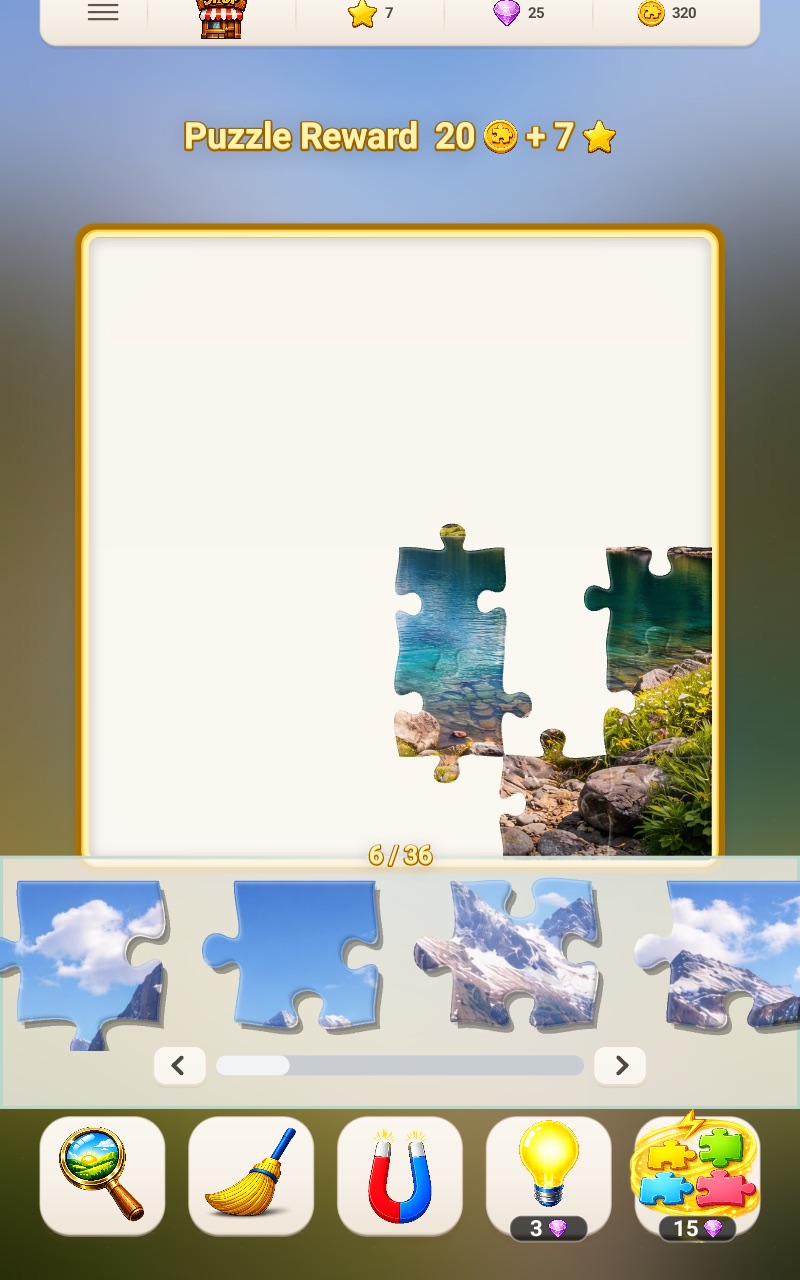
Flat edges reduce uncertainty and define the exact space available for the picture.
 Fun Journey
Get the game
Fun Journey
Get the game
From scattered pieces to a clear picture
Use a simple order—preview, edges, color groups and small sections—to make steady progress without turning a relaxing puzzle into a race.
Practice in Fun Journey ↗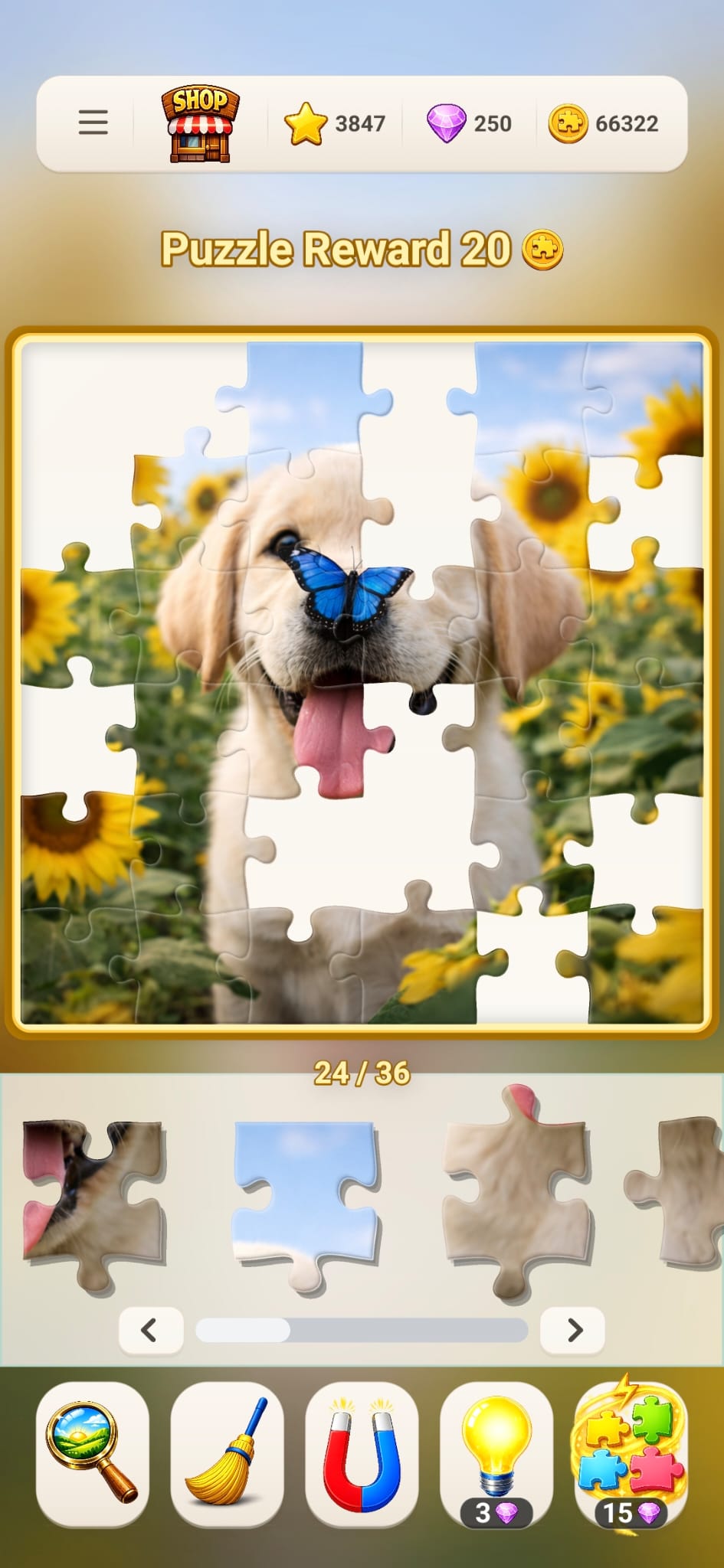
Before the first piece
Spend a moment noticing the biggest visual regions: sky, faces, flowers, water, buildings or a strong horizon. These become your working map.
Then inspect the tray for flat sides and unmistakable colors. You are not trying to memorize everything—only deciding where the first few confident connections can happen.
Flat edges reduce uncertainty and define the exact space available for the picture.
Join recognizable colors and textures away from the border, then connect each island when its location becomes clear.
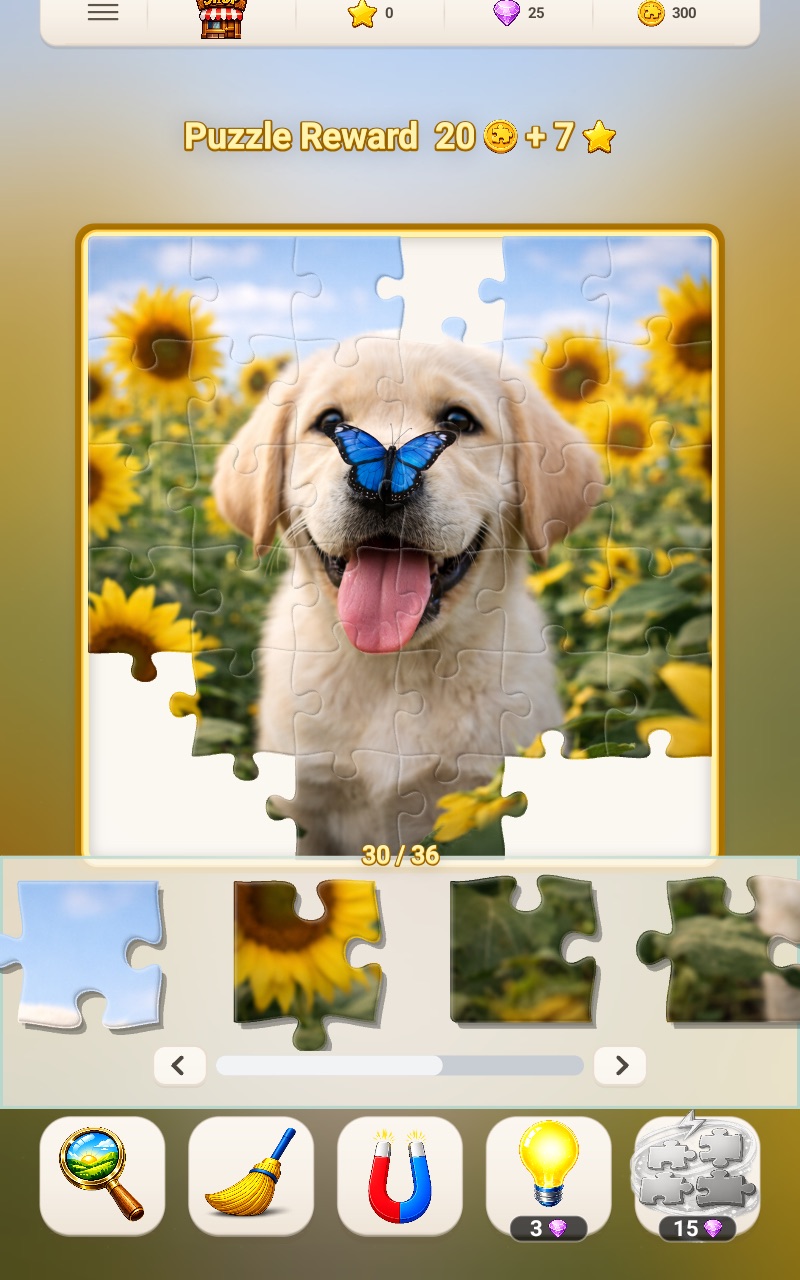
Near the end, study the empty shape on the board. Its tabs and blanks are often more useful than the printed image.
When progress slows
Instead of asking “Where does this piece go?”, ask “Which area has this color?”, “Which direction does this line travel?” or “What shape is missing here?” A better question reduces the board.
Solving questions
Edges are a reliable start, but a highly recognizable subject can be equally useful. Begin wherever the picture gives you the strongest clues.
Sort by color early, when the image provides broad clues. Sort by tabs and blanks later, when you are filling a specific remaining space.
Look for tiny changes in shade, texture direction and piece shape. Place nearby picture sections first so the empty spaces narrow the possibilities.
The method becomes a rhythm