A little time to puzzle
A short puzzle break can be one good section.
You do not need to finish a whole jigsaw for a session to feel worthwhile. Choose an image you can read easily, aim for a small piece of progress, and decide when to stop before you begin.
Read the guide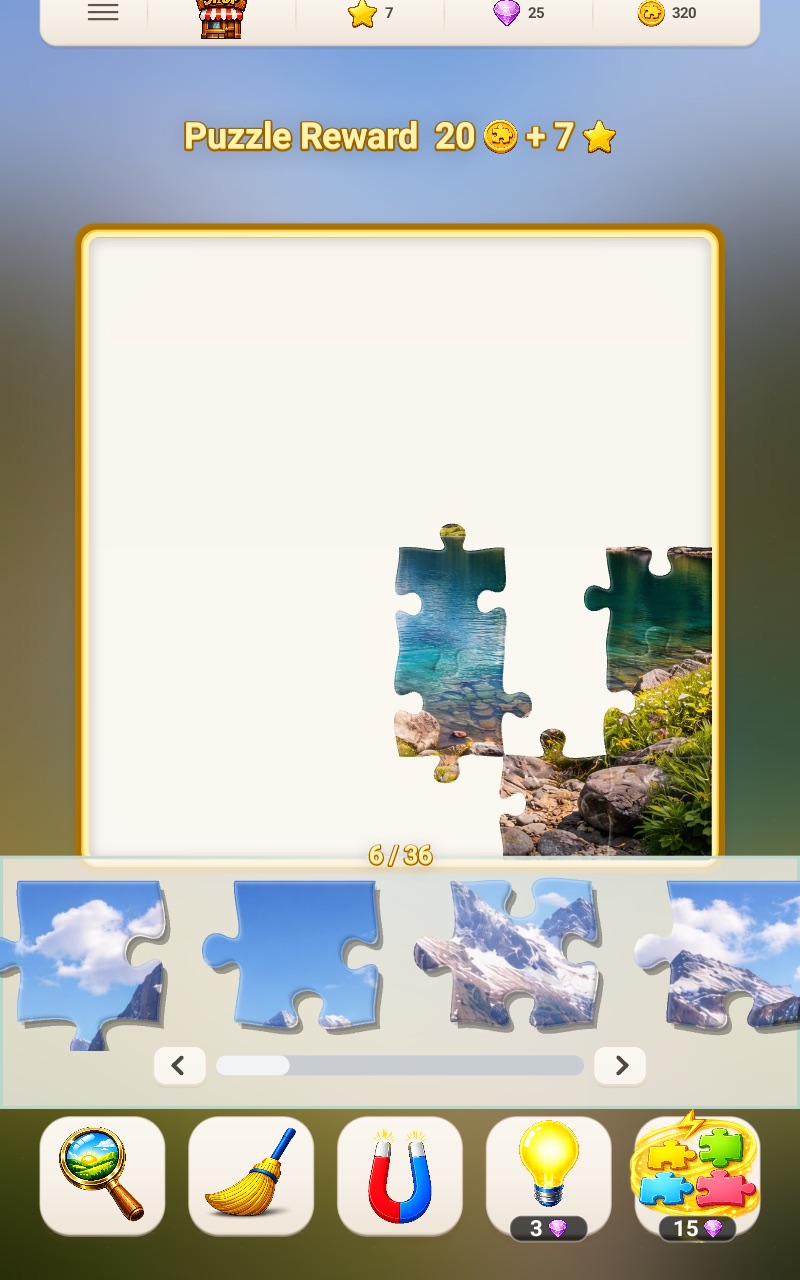
Choose a goal that fits the break you actually have
A break between tasks, a quiet moment before dinner, and a free afternoon call for different expectations. If you have only a few minutes, making completion the goal can turn a pleasant puzzle into a race. A smaller target gives the session a shape: connect two obvious pieces, complete a flower, or identify the next area you want to work on.
Choose a stopping time as well as a puzzle goal. The time is the limit; the goal is something to work toward within it. If the break ends before the section is complete, you can still have learned where a difficult piece belongs or made the next session easier to begin.
If you are waiting for something that needs your attention, keep the puzzle secondary to that task. A game is optional, and a very short interval may be more comfortable without starting a new activity at all.
Pick a picture with an obvious place to begin
For a short session, look for landmarks you can recognize at a glance. A distinct animal face, a cluster of bright flowers, or several objects in different colors can give you a clear first move. You spend less of the break deciding which part of the scene a fragment might belong to.
In the puppy picture from Fun Journey, the blue butterfly, dark nose, and yellow sunflowers provide separate starting points. The art-materials picture gives you paint jars, a palette, and brushes. You could choose just one of those objects as your session's focus.
A mountain scene can also work well, especially around a sharp ridge or a shoreline. Broad areas of similar sky or water may ask for closer inspection. Enjoy those areas when that is the kind of puzzle you want; choose a more distinctive section when you would prefer several clearer placements.
Use piece count to reduce the amount you need to examine
A smaller count usually gives you fewer fragments to search through and a larger part of the image on each piece. That makes it a sensible starting choice for a quick session. It is still only one part of the decision: repeated patterns and subtle color differences can make a small puzzle less straightforward than you expect.
Fun Journey offers 36, 64, 100, 144, 225, and 400 pieces. Try 36 or 64 while you learn how much attention a session needs from you. Move up when you want more fragments to sort and more detail to examine, rather than because a larger number seems like a requirement.
You can also work briefly on a larger puzzle. In that case, use a section as the unit of progress. Joining a few pieces of a mountain ridge can be a complete session even when most of a 225-piece image is still waiting.
A practical routine for a short puzzle session
- Set the boundary. Decide how much of the break you want to spend playing, leaving time to return to what comes next.
- Choose one landmark. Look for a subject, outline, or color boundary that is easy to recognize. Avoid treating the whole picture as one immediate task.
- Follow that feature. Find fragments that continue the same line or object. Check nearby pieces before expanding to another area.
- Switch once if you stall. Move to another clear landmark instead of repeatedly trying the same uncertain piece.
- Leave a clear next step. Before stopping, notice the unfinished feature you would examine first next time.
For example, you might begin with the puppy's butterfly, connect the surrounding facial details, and stop with the nose as your next landmark. In the art picture, work on the brush jar before turning to the pencils. The useful habit is choosing a limited area, not following the same order in every puzzle.
Make stopping part of the plan
Natural stopping points include finishing an object, joining two groups, or reaching the time you set. They do not have to coincide. If you complete your chosen section early, decide deliberately whether you want another small section or whether the break has done what you wanted.
Before relying on any puzzle app for interrupted sessions, check how it handles leaving and returning to a puzzle on your device. Try that behavior during a low-pressure session. Knowing what happens when you switch away is more useful than assuming every game treats unfinished boards the same way.
There is also no need to turn every break into a streak or daily commitment. If choosing the next puzzle is enjoyable, make that choice. If a daily prompt helps you begin, use it. Let the routine serve the time you have available.
Why a piece count cannot promise a completion time
Two players can spend very different amounts of time on the same image. Familiarity, screen size, the visibility of details, interruptions, and how carefully you like to examine each move all matter. Even your own pace can change from one day to the next.
Instead of searching for a guaranteed five-minute jigsaw, keep track of what felt manageable in your last few sessions. Perhaps a 36-piece picture with strong landmarks fits your preferred pace, or perhaps you enjoy returning to one larger scene. Use that experience to choose the next puzzle without treating a slower session as a failure.
A jigsaw may fit your short break if you enjoy making a few visual matches and can comfortably leave an image unfinished. If you need an activity with a fixed ending at an exact time, an open-ended puzzle may feel less convenient.
Find a starting point in Fun Journey
Jigsaw Puzzles: Fun Journey is an Android game with Daily, Journey, Collections, and Battle modes. Collections gives you a place to explore pictures; Daily provides a recurring puzzle option; Journey offers another way to progress through the game. Battle is available when competitive play is what you want from a session.
For a first short break, begin with the picture and piece count you find approachable. Focus on one landmark and notice whether you enjoy the repeated act of finding and placing a piece. You can explore the other modes after you know what kind of session fits you.
Questions before your next puzzle
Can I finish a jigsaw puzzle in five minutes?
Some players may finish some puzzles in that time, but no piece count guarantees it. Image detail, familiarity, device, and interruptions change the pace. For a five-minute break, use the time as a boundary and make a small section your goal.
What piece count should I choose for a short break?
A smaller count such as 36 or 64 is a practical place to start in Fun Journey. Pair it with a picture that has distinct landmarks. You can also work on one section of a larger puzzle if you are happy to leave the rest unfinished.
Do I need to complete the daily puzzle in one sitting?
A short-break routine does not need to revolve around completing a daily puzzle. Choose a manageable goal and check the current game mode’s rules and leave-and-return behavior before planning to spread a puzzle across sessions.