A practical range—not a promise
How long do jigsaw puzzles take?
For an online puzzle, a useful starting range is about 8–15 minutes for 36 pieces, 30–50 minutes for 100 pieces and 1–2 hours for 400 pieces. A first attempt, a repetitive picture or a smaller screen can take longer; a clear image and familiar method can be quicker.
What changes the clock
Piece count is only the first variable.
Use these clues to judge a picture before you begin.
Piece count
More pieces create more comparisons, smaller image fragments and more possible locations.
Image structure
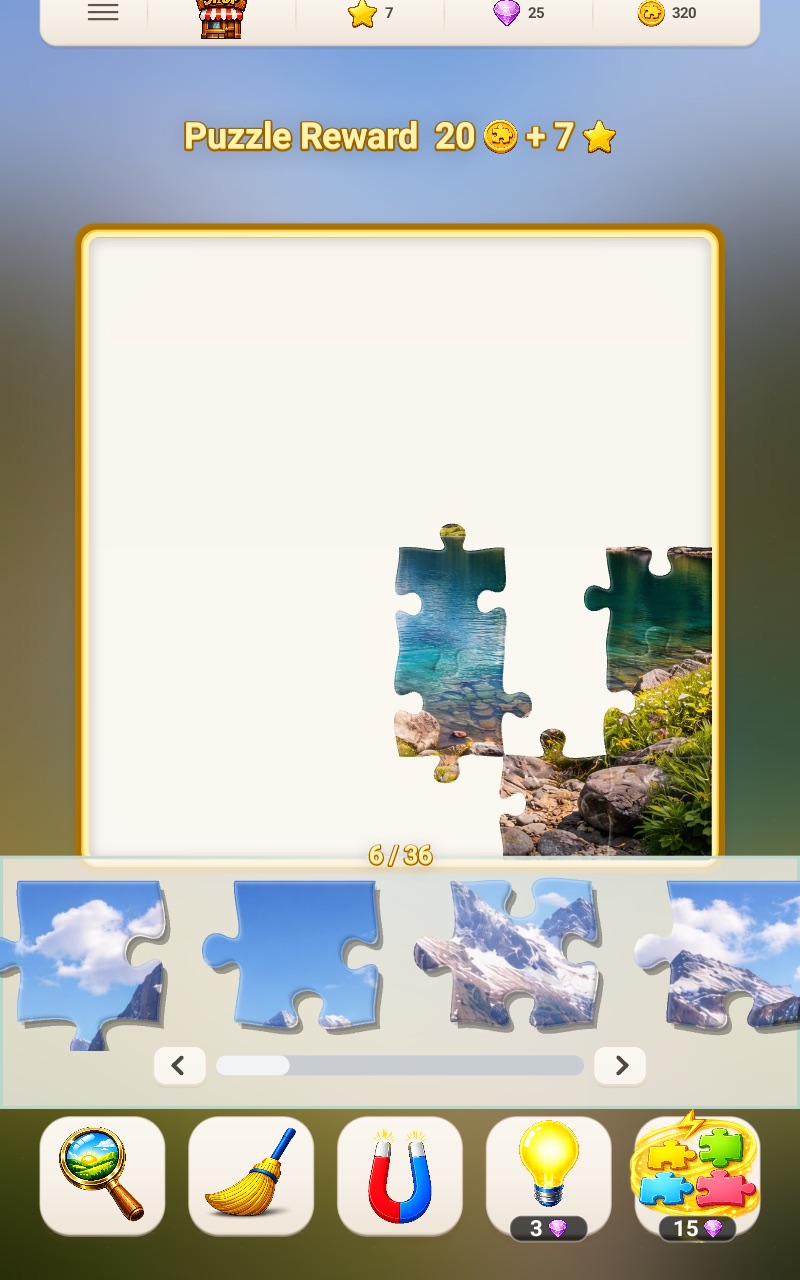
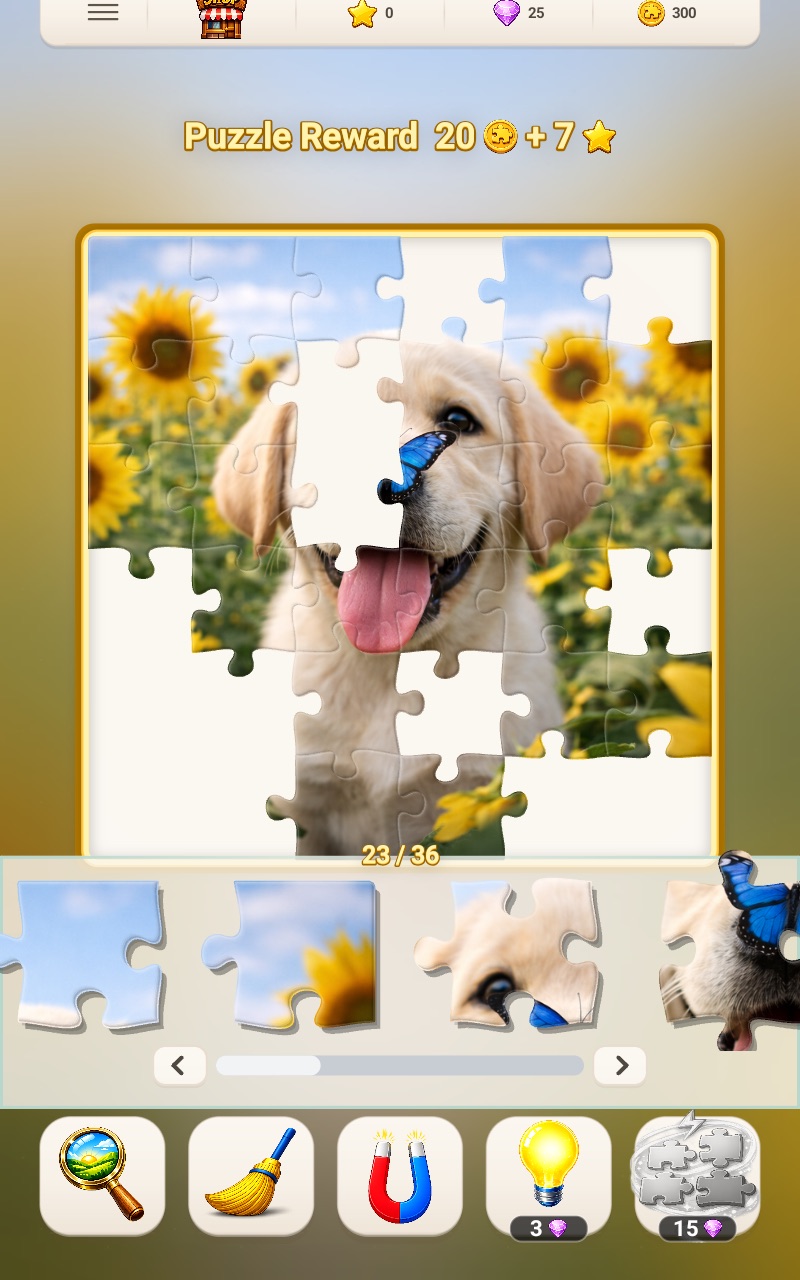
Faces, flowers and sharp color borders create landmarks. Sky, water, fur and repeated patterns make pieces harder to locate.
Available space
A larger screen or table can keep more pieces visible. Extra scanning and scrolling can lengthen the same solve.
Your method
Purposeful sorting and small connected sections usually reduce searching more than repeatedly testing random pieces.
Pauses and tools
Interruptions change elapsed time. Preview, Edge Pieces, Sweep and Hint can shorten a difficult moment in Fun Journey.
Choose by session shape
Rough online-puzzle time ranges by piece count.
A short first puzzle or quick break.Large, readable fragments and fewer tray comparisons.
A compact but complete session.More sorting, while major picture landmarks remain easy to recognize.
A fuller puzzle with room for a method.Color groups and connected sections become more useful.
A focused longer session.The nearest published comparison is 150 pieces; picture difficulty matters more here.
A longer challenge or more than one sitting.Repeated textures and smaller fragments ask for tighter sorting.
An extended, deliberate solve.Screen space, tray organization and breaks matter much more.
Build your own reliable estimate
Measure one puzzle, then adjust by the picture.
Your own history is more useful than a generic average. Complete one comfortable puzzle without rushing and note the count, picture type and screen. For the next board, adjust your expectation upward for repeated textures or a larger count and downward for clear landmarks or a smaller count.
- Compare active solving time, not a puzzle left open all day
- Record the picture as well as the piece count
- Notice where the solve slowed: sorting, scrolling or a repeated area
- Choose the next board around the time and attention you actually have
Puzzle-time questions
A useful estimate starts with the right comparison.
Do more pieces always take longer?
Usually they add more searching and sorting, but image structure can overturn a simple count comparison. A smaller picture with a large repeated sky can feel slower than a larger picture with many clear landmarks.
What is a good piece count for a short session?
In Fun Journey, 36 or 64 pieces provide the least visual load. Choose a picture with strong color zones when you want the most direct route to a finish.
Should breaks count toward my puzzle time?
No, not if you want a useful personal comparison. Track active solving time separately from breaks, app switching or a board left open. Use total elapsed time only when you are planning how the puzzle fits into your day.
Why did two puzzles with the same count feel so different?
The number was the same, but the evidence inside each piece was not. Distinct objects and boundaries reveal location; repeated colors and textures require more shape comparison.