A useful default, not an unbreakable rule
Should you start a jigsaw puzzle with the edges?
Start with the edges when the border is easy to identify and varied enough to connect. Start with a distinctive subject when the border is repetitive. For many pictures, the best opening is hybrid: collect the edges, then build the clearest interior landmark.
Make the first move from the picture
Choose the opening with the strongest evidence.
The edge-first opening
Pull the flat sides, then sort the border by evidence.
Do not make one giant edge pile. Separate light from dark, smooth from textured, and any obvious corner-to-corner color changes. Connect the easiest runs first and leave ambiguous stretches open.
The frame gives the puzzle a boundary and shows the scale of the finished image. It becomes less useful when every edge piece shows the same sky, water or dark background.
The image-first opening
Build the object you could point to immediately.
An eye, a beak, a red flower or a mountain ridge narrows location quickly. Group the pieces that contain that landmark, connect a small island and use its outline to find nearby colors.
This is not “ignoring the border.” It is choosing the part of the image that answers the most questions first.
The hybrid opening
Keep two anchors moving instead of forcing one.
Collect flat edges while scanning, connect the obvious border sections, then move to a strong interior group. Return to the frame when new neighboring colors make the remaining edge pieces easier to place.
This approach is especially useful when only part of the border is distinctive.
A real example
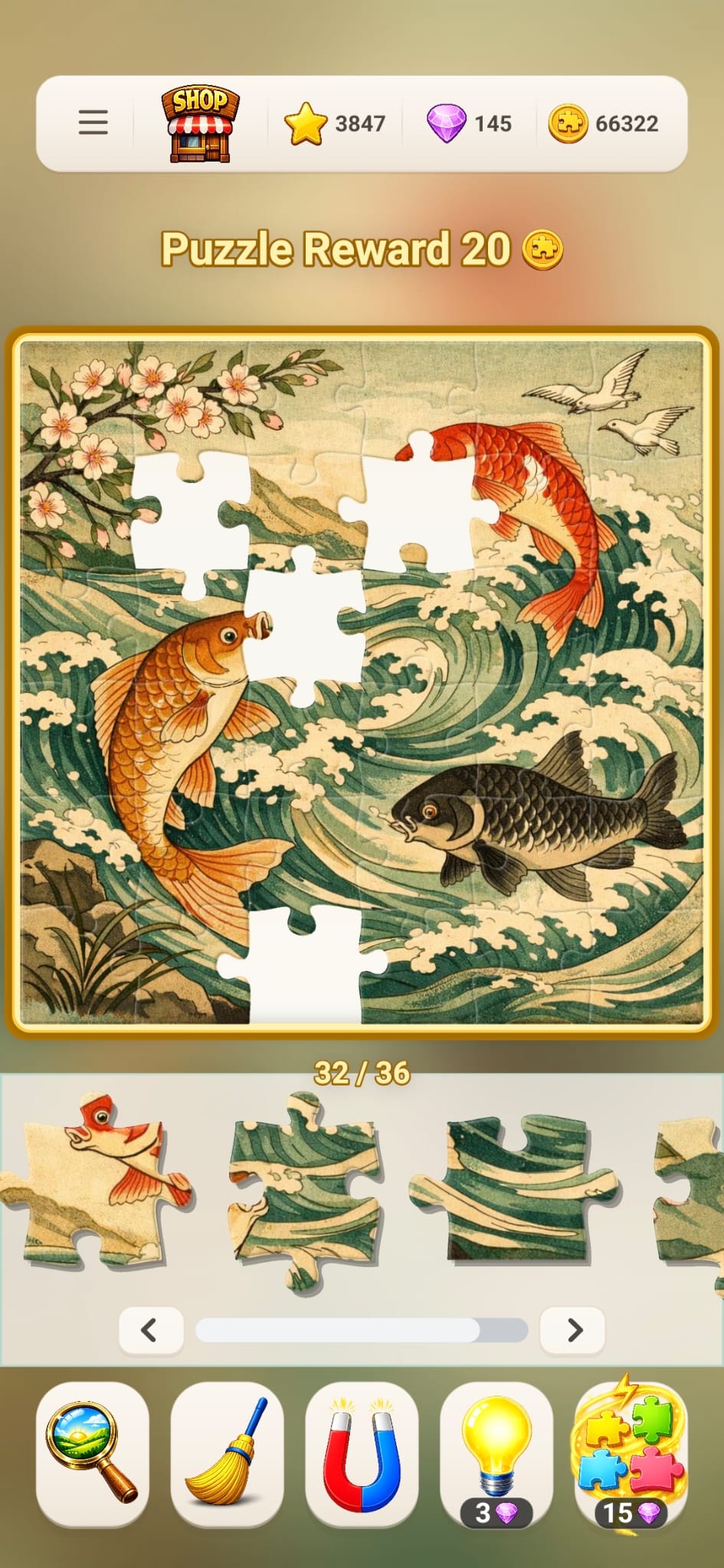
In the koi picture, the fish may be stronger than the waves.
The orange and black fish contain recognizable curves, scales and color boundaries. The surrounding water repeats similar greens and pale foam. Collecting edge pieces still helps, but a fish can become the more informative first island.
- Ask which group has the clearest location
- Use a border run without waiting for the entire frame
- Switch groups when progress becomes random
- Return when neighboring pieces create better evidence
Edge-first questions
The frame is a tool, not a test of doing puzzles correctly.
Is it wrong to start in the middle?
No. A distinctive interior object can reveal location faster than a repetitive border. The useful opening is the one that creates confident connected pieces.
Should I pull out every edge before placing anything?
Not necessarily. Collect obvious flat sides as you scan, but place a clear interior group when it is ready. Sorting should support building rather than delay it.
How can Fun Journey help me find edge pieces?
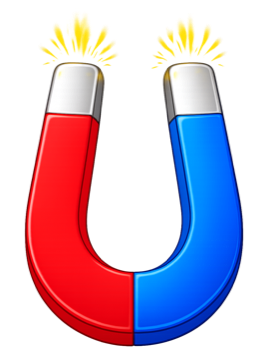
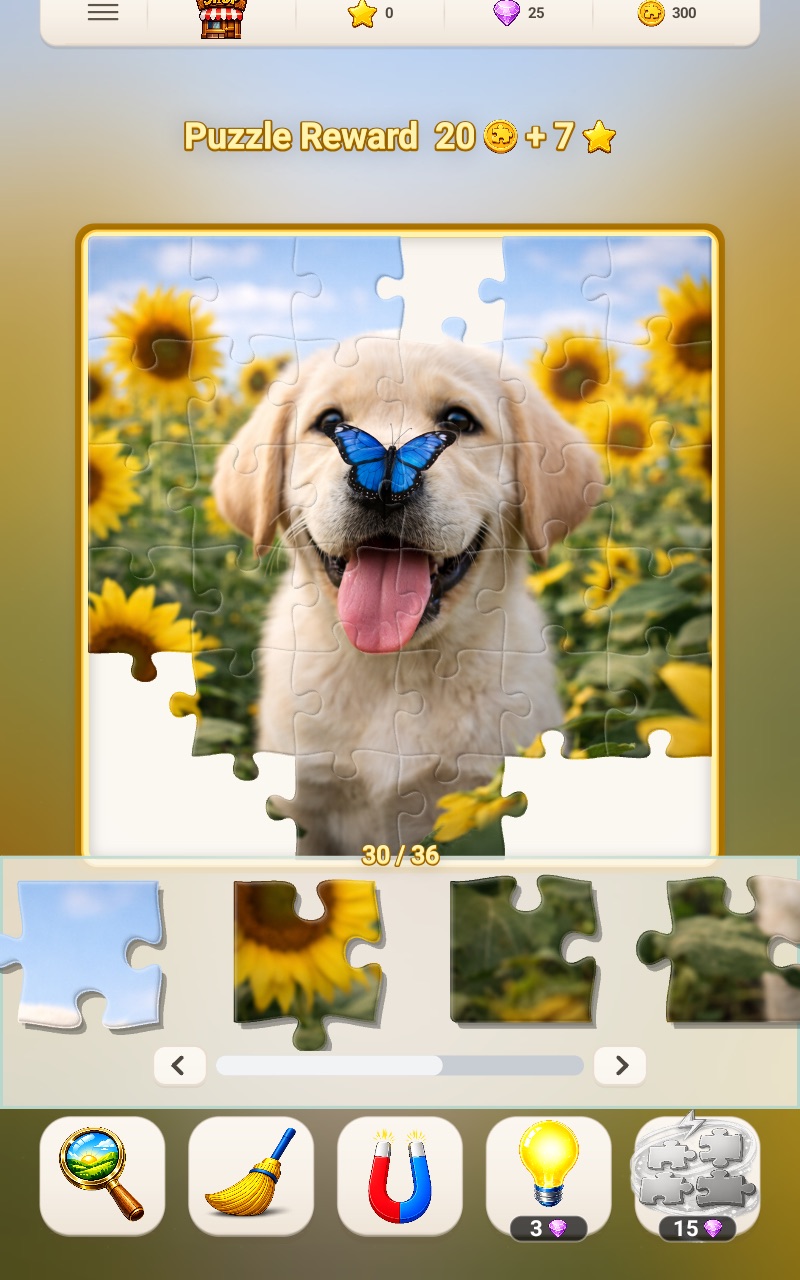
The magnet-shaped Edge Pieces tool brings corners and edges forward in the tray when you want to work on the frame. Press and hold Preview to judge whether the border itself is distinctive.
What if the border is one repeated color?
Sort those pieces by subtle shade, texture direction and shape, then build an interior landmark first. The completed interior will later provide more context for the border.