Stop asking the same question
Stuck on a jigsaw puzzle? Change the information.
Randomly trying more pieces usually repeats the same uncertainty. This reset sequence changes your view, your region or the clue you are using.
The sixty-second reset
Look away from the piece you have been forcing.
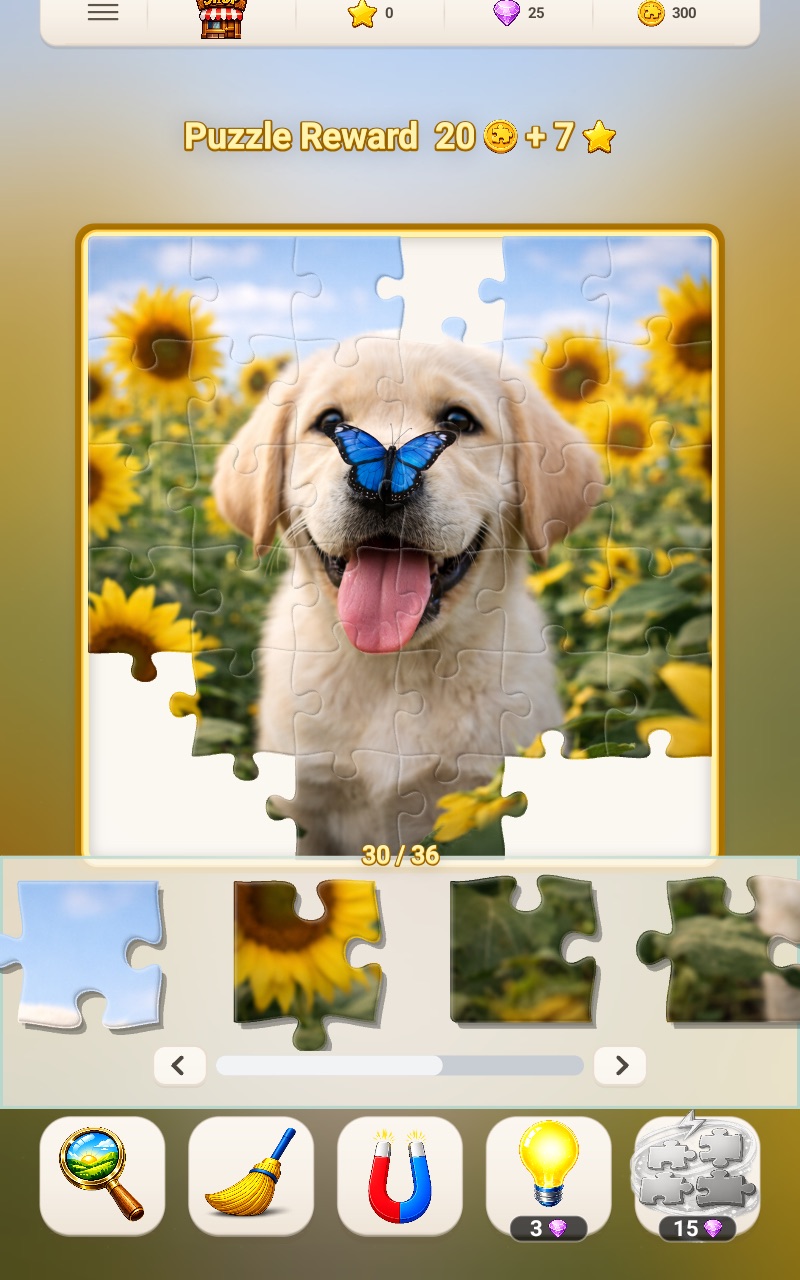
Zoom out or step back. Find the largest completed section. Identify one open boundary with a clear color or line. Then scan only for the piece that continues that clue.
Restore the whole picture
Look at the box image or digital Preview. Identify the location of your completed islands and the largest unfinished region. The goal is not memorization; it is recovering orientation.
Switch to a different region
A repetitive sky may be hard now while a face, flower, roofline or bright object is ready to connect. Build the easier island and return after it changes the surrounding spaces.
Sort one new category
Do not reorganize the entire puzzle. Pull only flat edges, pieces carrying a particular boundary, or the texture used in your chosen region.
Read the empty shape
When a gap is surrounded, ignore the picture for a moment. Note the exact tab-and-blank pattern and the direction of any line crossing into the space.
Use the smallest useful assist
On a digital board, Preview may be enough. Edge focus may solve an organization problem. Sweep can return misplaced loose pieces to the tray. Use a Hint when one direct assist will restore momentum.
Different stalls need different fixes
Diagnose before you act.
- The tray feels crowded
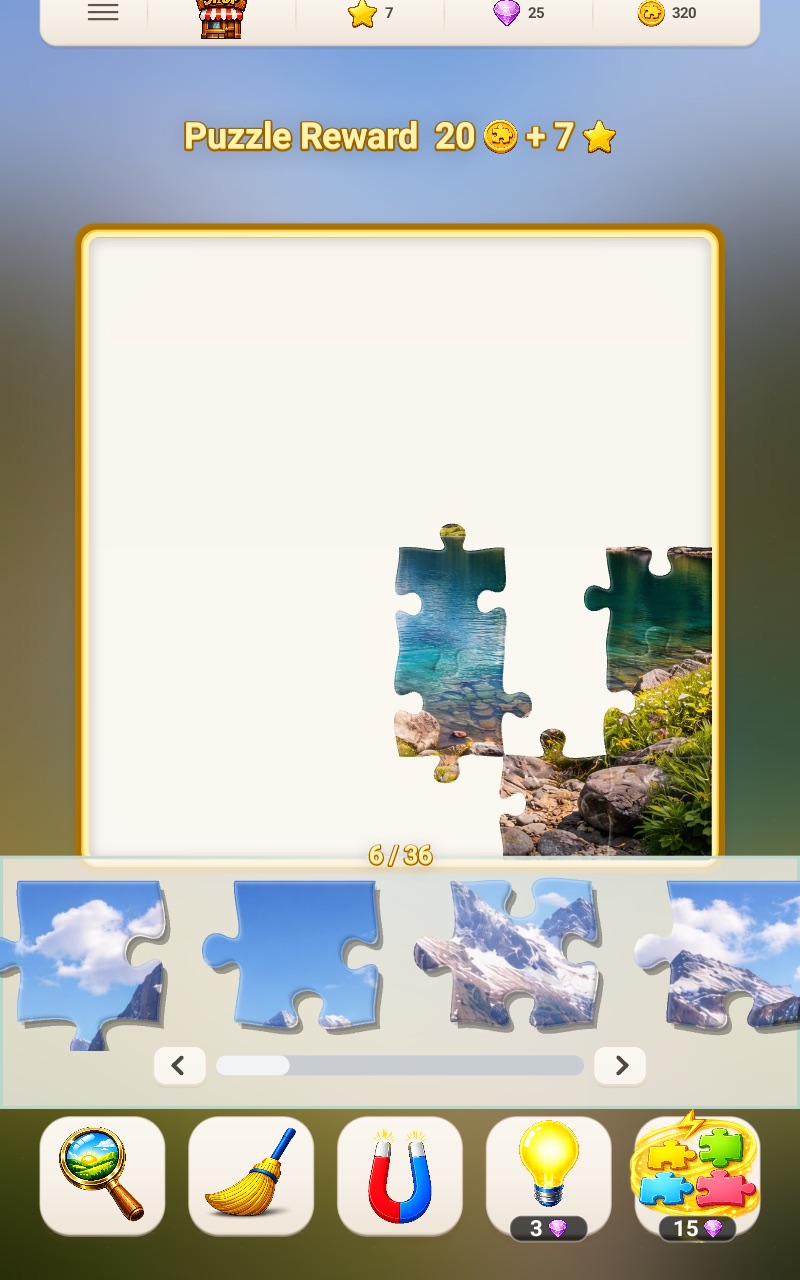
- Reduce it to edge pieces or one visual category.
- Every piece looks the same
- Use tiny shade changes, texture direction and exact shape.
- You cannot see where a section belongs
- Preview the complete image and locate the nearest landmark.
- You are repeatedly testing one gap
- Leave it and extend another boundary first.
Getting-unstuck questions
Progress often appears after the view changes.
Should I take every puzzle apart and restart?
Usually not. Preserve confident connections and change only the region, sorting category or clue that is failing.
What if a large area is all one color?
Build the surrounding regions first. Then use subtle shade changes, texture direction and the exact shape of the remaining gaps.
Is using a hint cheating?
A puzzle is yours to enjoy. Use a hint deliberately when it keeps the session satisfying; the rest of the picture still requires your decisions.